Baby Chicken Pictures Gray Chicken Hatching Out Eggs
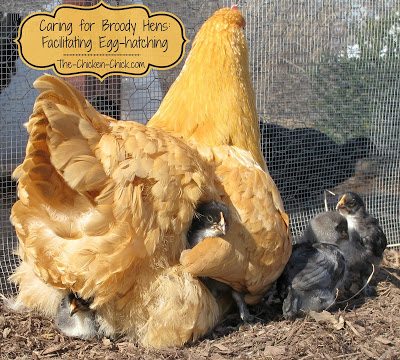
Adue south much as I bask pulling upward a chair and watching chicks hatch from eggs in an incubator in my kitchen, in that location is no question that assuasive a hen to hatch eggs is significantly easier than monitoring and managing the process in an electric box. Mother hens handle all of the hatching details from humidity to temperature and egg-turning to raising the chicks. Managing mother hens can be washed the like shooting fish in a barrel way…or the hard way. In this article, I'll discuss the difficult way and the easy manner to care for broody chickens to facilitate egg-hatching, just first, allow's talk over broody nuts.

WHAT IS A BROODY HEN?
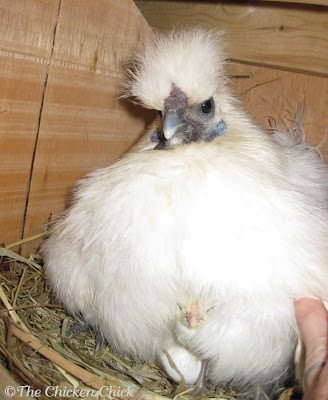
A hen that is committed to hatching chicks is known as a broody. The state of being broody is controlled past instinct, hormones and lighting conditions. Left to her own devices, a broody will lay a clutch of eggs, then cease egg-laying and sit on them for 21 days (more or less) until they hatch.
Not every hen will become broody in her lifetime, but those that exercise are fiercely protective of their nests. Some breeds are more inclined to breed than others; in particular, Silkies, Cochins and Australorps are perpetual contenders for the Broody Mother of the Twelvemonth Laurels.
HOW TO Place A BROODY HEN
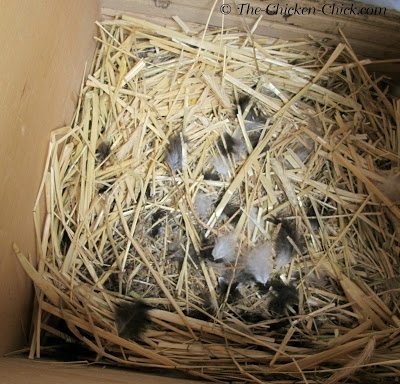
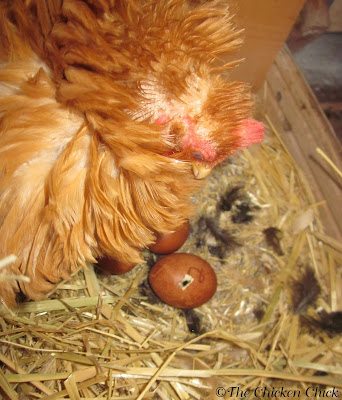
In full general, a broody prefers a dark, private, comfortable location in which to set. Her chosen spot can range from a nest box inside the coop to a hidden location away from the coop. She plucks her own breast feathers to expose the warmth and moisture of her skin directly to the eggs (hence the expression "to plume one's nest").
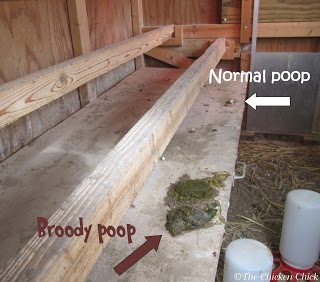
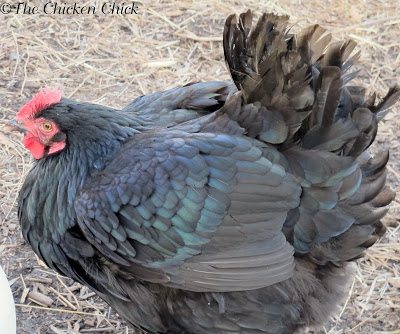
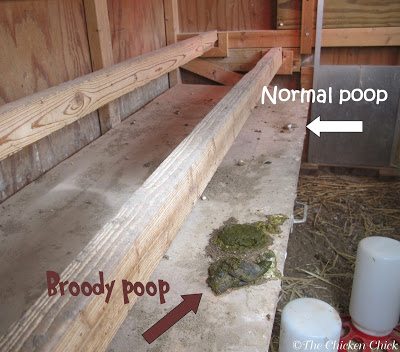
The sweetest hen in a flock is barely recognizable when she is broody. When she is approached,she growls, shrieks, puffs out her feathers and pecks at the intruder, trying to exist as intimidating as possible in defense force of her eggs. She sits in the nest all day and nighttime, leaving information technology briefly one time or twice a twenty-four hours to eat, drink and save herself. Broody poop is distinctive, ginormous and the most foul smelling eolith possible.
THE QUITTER and the HOMICIDAL HEN
Just because a hen is broody does not mean that she is going to be a successful or dedicated hatching hen. Some abandon the eggs after a number of days or weeks, or worse- they kill the chicks that hatch. Unfortunately, the merely way to know whether a hen will be a good female parent is by existence a skillful mother. There is no test or method for predicting whether a hen volition quit setting before the eggs hatch or become homicidal until it happens.
Rachel, my Bantam Cochin Frizzle on hatch day. Unfortunately, she is a homicidal broody.
Before purchasing expensive hatching eggs for a broody to hatch, it is wise to put her through the paces with ordinary hatching eggs. I have learned the hard way never to give an unreliable broody a second run a risk. If she abandoned the nest or harmed chicks one time, she will practise information technology once again. Past performance is the best predictor of futurity behavior. Have a back-up plan in apprehension of a quitter fifty-fifty with the less valuable eggs. Keeping an incubator on-hand in the consequence a broody abandons the eggs can be life-saving.
HOW TO Cease BROODINESS
If there are no fertile eggs bachelor or the broody sits on an empty nest, broodiness can continue long across 3 weeks, resulting in negative health consequences for her and issues for other hens. A broody eats, drinks andeliminates waste once or twice a day at most. She consumes lxxx% less feed per mean solar day than usual. Over fourth dimension, her comb becomes stake, her feathers lose sheen and she loses a noticeable amount of weight. This drastic change normal routine is tolerable in 21 day stints but protracted stints are unhealthy for her. When a broody hen is not needed, the behavior should be discouraged by "breaking" her. This article addresses how to break up a broody hen.
IS It POSSIBLE TO Brand A HEN BROODY?
Nope. Either a hen is broody or she is not- 1 cannot make a hen broody. However, a hen that is already in the mood to brood may exist encouraged to set up if she sees a nest full of eggs or some other hen heart-searching as the country seems to be contagious.
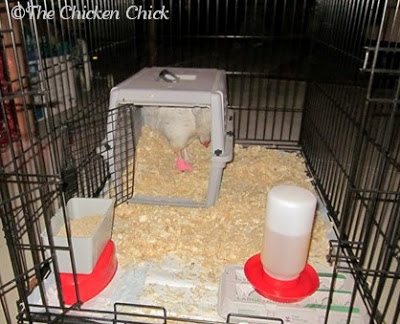
It doubles as a infirmary ward for sick or injured birds.
A BROODY HEN'S NEEDS: Maternity WARD vs. COOP NEST BOX
MATERNITY WARD SPECIFICATIONS (The Like shooting fish in a barrel Way)
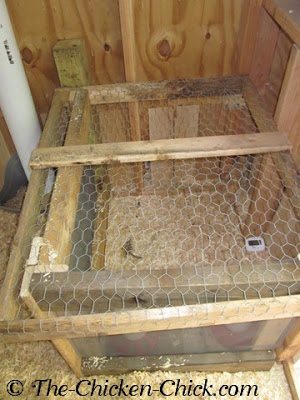
Ideally, every broody will take her own private, quiet, predator-proof space apart from the flock. Serious breeders have dedicated coops or broody pens for the purpose of housing broodies. A broody does not need much to do her matter: a dark, cozy spot for the eggs, a food and water station and a location in which to relieve herself. Later iii weeks, the chicks should hatch and she will keep them warm, show them where the food and water is and protect them from intruders.
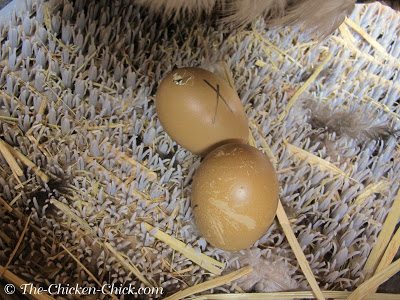
The bottom of the nest should be soft so to protect the eggs. The weight of the hen, the shifting of position and jostling of eggs on her mode into and out of the nest for 21 days tin cause eggs to scissure and ultimately kill any alive embryo inside. To limit the affect to the eggs, I recommend nest box pads and liners either alone or with chopped straw or shavings on summit. While straw isn't necessary with nest pads, broodies like to arrange their nests and straw gives them the opportunity to piece of work their nesting instinct.
FOOD & H2o
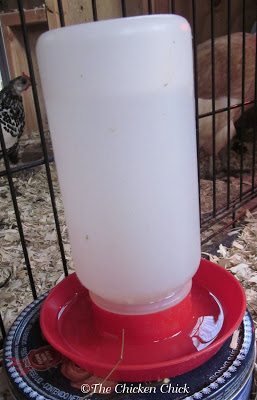
A broody consumes eighty% less feed than usual and stops laying eggs while setting. Since layer feed has calcium added for eggshell production, a hen doesn't need layer feed while brooding. I give my broodies chick starter ration since that's the chicks will eat after they hatch; it'south higher in protein and lower in calcium than layer feed, which works well for broodies since they're non laying eggs anyway. Scratch can as well be offered to the broody hen every bit the high carbohydrate content will provide extra calories during her three week crash diet. Go along the food and water shut to the nest to ensure that less adventurous broodies avail themselves of at least one meal a day.Fresh, cool water is critical to the wellness of a broody hen and should be made available at all times. A dehydrated hen tin dice very apace.

HOW MANY EGGS?
A hen can manage to embrace and go along warm approximately 12 eggs proportionate to her size, significant: if she is a runted, information technology is reasonable to wait that she can intendance for 12 bantam sized eggs, fewer if the eggs are from a larger hen. If the broody is a large fowl breed, she tin handle 12-15 eggs of the size she would ordinarily lay, more if they are bantam eggs. Much more about acquisition of and treatment of the hatching eggs, hither.
MOVING THE BROODY
A broody hen doesn't usually have the good sense to make a reservation for a room in the motherhood ward, she usually parks herself inside a coop nest box, which ways that she must exist moved to the motherhood ward, which tin can exist tricky. Some broodies are more attached to their chosen location than others and will protest mightily while trying to return to it if moved. Moving a broody hen is best done at nighttime when she is less probable to exist upset by the alter of scenery. The feed, h2o and makeshift run should be in place earlier the move is made.
CANDLING
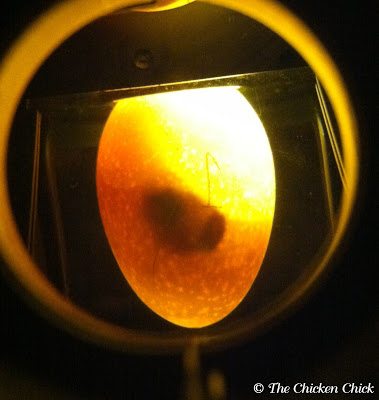
Candling is the term used for shining a calorie-free through an eggshell to decide whether an embryo is developing or not. The egg candler used in the photo below is a Brinsea Ovascope. Eggs without developing embryos or with embryos that have died should be removed from the hen'southward nest. Candling eggs should exist done after night if at all, and then as to limit the stress to the broody.
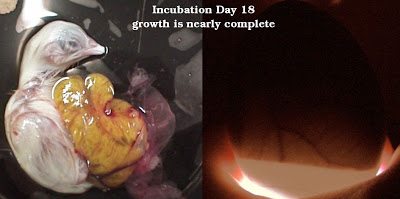
When I candle broody eggs, I do information technology twice at almost, at day ten and 17. Past day ten any egg that has not begun to develop will be obvious and should be removed. Later on mean solar day eighteen the embryo begins to presume the hatching position and should no longer be moved, so I like to candle on twenty-four hour period 17 at the latest. The photograph below shows what an embryo three days away from hatching looks like from the within (left) and when candling from the outside (correct).
Contrary to popular belief, a hen does not necessarily boot bad eggs out of the nest. Sometimes eggs plant outside the nest are viable and sometimes she continues to sit down on rotten eggs until the bitter end. I wish I had a nickel for every rotten egg I have discovered in the nest later on a hen has left it to treat her brood. I take besides rescued more than one developing egg that a broody has kicked out of the nest. When finding an egg exterior the nest, it should be candled information technology to assess its viability and the stage of developmentand if it's on track, put dorsum under the broody, nether a different broody hen or in an incubator.
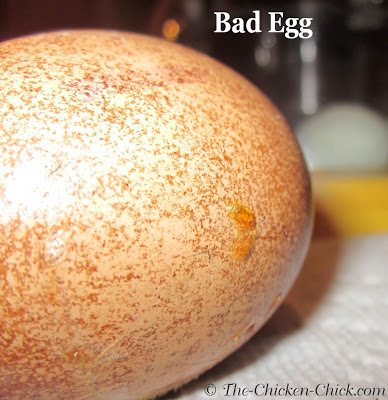
I highly recommend performing the sniff exam on hatching eggs whenever possible even if it'south simply trying to get a whiff while passing by the broody'south nest. Rotten eggs can often be detected from a considerable distance and must be removed from the clutch so every bit not to jeopardize the entire hatch. More on rotten eggs, here.
MAINTENANCE
Keep the nest clean and dry. Bacteria plus eggs=dead embryos and rotten eggs. Accidents do happen from broken eggs to poop and soiled nests should be cleaned upon discovery to limit the exposure of leaner to the eggs. Broodies get out the nest at approximately the aforementioned time daily to eat/drinkable/poop/dust bathe, which is a good time to bank check and change the bedding.
Ix out of 10 times I miss a broody taking her daily intermission, but I e'er scout for broody poop in the yard or coop to exist sure she is eating. Some broodies must exist physically removed from the nest in guild to ensure they are getting the minimum daily intake of water and nutrient. A broody who does not poop has non eaten, which is a hazard to her wellness. Continue the feed and h2o near the nest so she doesn't take far to travel to achieve it. It is normal for a hen non to leave the nest the last 3 days of the 21 24-hour interval setting menstruum, so don't disturb her at that point.
BROODER ON STANDBY
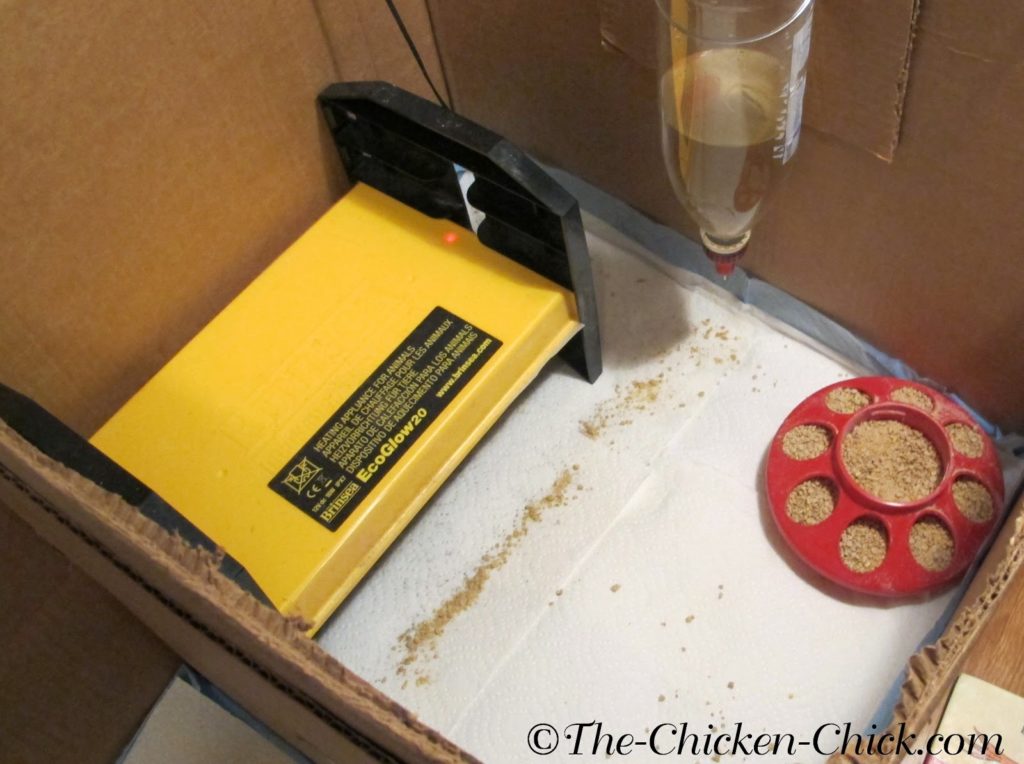
Pay attention to the expected date of hatch and begin listening for cheeping chicks any time after day 19. Chicks will begin cheeping inside the egg prior to hatching and at this point, it'south prudent to watch the hen for hostility or rejection. Onetime it is necessary to rescue a chick from a broody hen either considering the hen attacks, rejects, or abandons them. I e'er have a brooder set-up prepare on hatch day in the event of rejection by the mother hen.
FEEDING MOTHER HEN & CHICKS
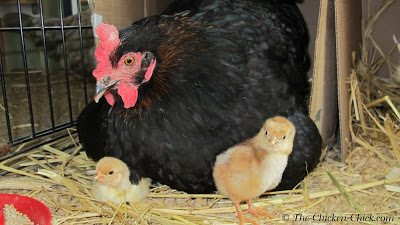
Past providing starter feed in the maternity ward for the broody in that location are no special preparations required for feeding the chicks. The female parent hen volition bring them to the feed and h2o and teach them to swallow and drinkable.
Chicks practice not need grit to assimilate most commercial starter feeds. Starter feed is designed to be digested by saliva with no need for further grinding with grit in the gizzard. Whatsoever time chicks are given treats or fibrous foods or whole grain feed, they should be provided with grit, all the same. Don't blitz the treats/extras/snacks with chicks; treats interfere with the counterbalanced nutrition contained in starter.
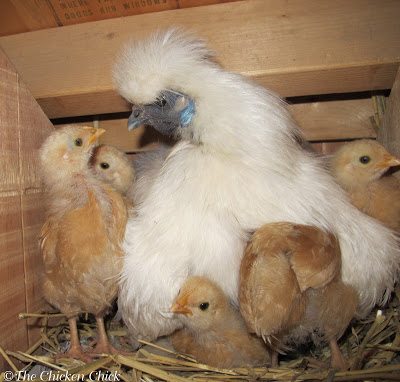
The hen will need layer feed approximately a calendar month after hatching since she may begin to lay eggs any time afterwards 5 weeks. It is at that betoken that most broodies begin to distance themselves from her babies, although there are exceptions. (encounter Freida below with chicks that are bigger than she and withal clinging shut to her side)
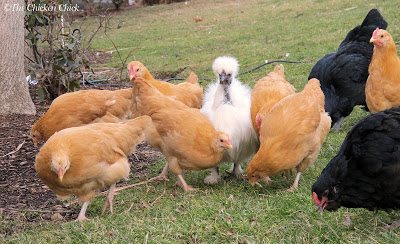
I meet but 2 disadvantages to a broody pen: starting time, there isn't much infinite to do or dust-breast-stroke unless the broody pen is huge and 2d, both the broody and the chicks must exist integrated into the flock when the chicks are old enough to hold their own with bigger birds, which is more challenging than allowing the broody to raise the chicks from solar day ane within the flock.
TIPS FOR BROODIES SETTING Within THE COOP
(The Hard Way)
Ideally a broody hen will have a private space in which to hatch eggs in peace, but practically, that is not e'er possible and often broodies hatch eggs in the coop nest boxes. The challenges of caring for a coop broody (CB) are significant. Laying hens however need to use the coop nest boxes regardless of the presence of a CB and will usually join her in it. This can lead to fighting, injuries and jockeying for position that endangers the eggs' integrity. Certain accommodations must be made in lodge to maximize the potential for a successful hatch in the chicken coop nest boxes.
LAYING HENS
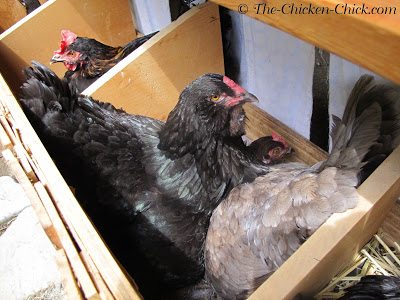
CBs occupy nest boxes that laying hens need to utilise. Laying hens will ofttimes bring together a CB in the nest box, deposit her egg then go on her way, but sometimes a laying hen will corking a CB off her nest eggs. The CB may or may non render to the hatching eggs. A less assertive laying hen may decide to lay her eggs in a less hostile environment outside the coop, sending the chicken-keeper on a daily Easter egg chase. Neither situation is desirable. It can aid to add together temporary nest boxes throughout the coop and run for laying hens to use while the usual nests are occupado. A 5 gallon bucket, a shallow cardboard box or an empty pet carrier can all serve as temporary nest boxes.
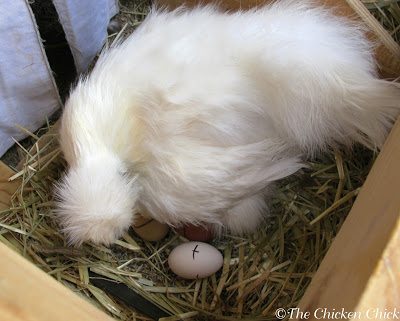
Some other trouble unique to CBs is disappearing eggs. Other hens may flee with the hatching eggs by tucking them underneath their wings, moving them to another location, or eating them. Gross, but truthful. There'due south not much that tin be done near this issue except to remove the CB with her remaining eggs to a motherhood ward.
MARK THE EGGS
A CB's hatching eggs should be marked conspicuously with a permanent marker or pencil and re-marked if the marks wear off. Marking the eggs makes it clear at a glance which eggs in the nest are hatching eggs and which were recently laid by other hens. Eggs should exist collected from the coop at to the lowest degree in one case a twenty-four hour period to remove freshly laid eggs. Check underneath a CB daily for freshly laid eggs. If she is especially ornery, collect them after dark using a flashlight.
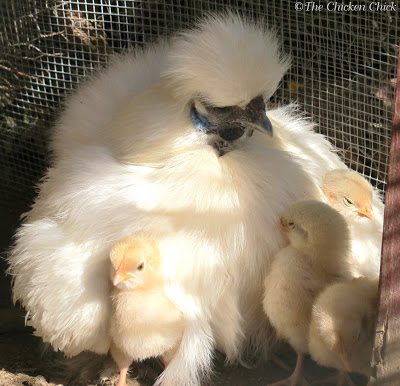
NEST Elevation
If the CB's nest is more than 12 inches off the ground, the broody should be moved to a lower, temporary nest within the coop no later than day 18 (3 days earlier hatch) for the safety of the chicks.
FEEDING CB & CHICKS
The aforementioned feeding guidelines as discussed in a higher place apply to CBs and their chicks: keep starter feed nearby with clean, fresh, cool water e'er bachelor. The laying hens in the coop can eat chick starter or chick starter/grower if necessary, only oyster beat out will demand to be supplied in a separate hopper. Chicks should never exist given layer feed because the added calcium can cause kidney damage, gout and other health bug later in life.
Mail-HATCH
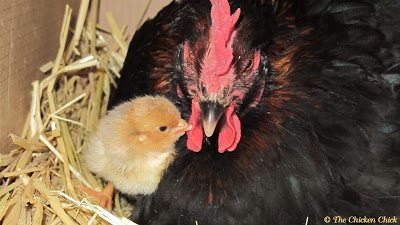
The best role of having a broody hen is watching her enhance the chicks. She will teach them to eat and potable and should proceed them condom from harm. The behavior of other hens towards the CB and her new chicks should be monitored carefully for the first few days. At any sign of hostility from flock members or if information technology becomes apparent that the CB is not fairly protecting the chicks, they should all be moved to an enclosure.
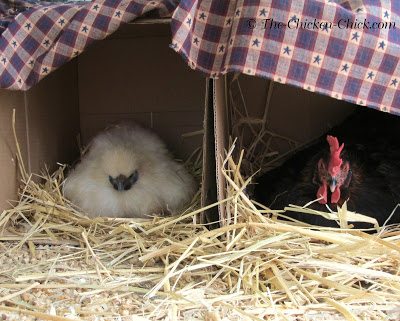
CO-PARENTING
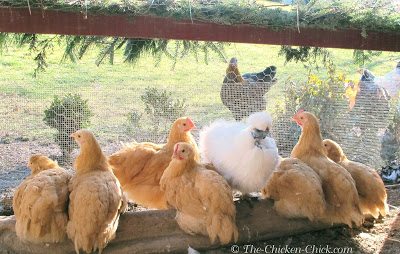
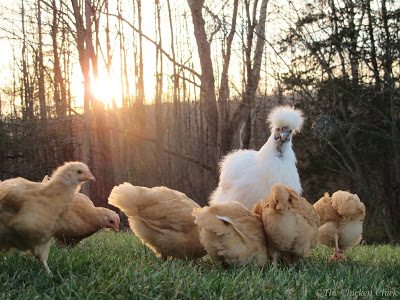
It is not uncommon for two broodies to sit down on one clutch of eggs or for two broodies to enhance chicks together.
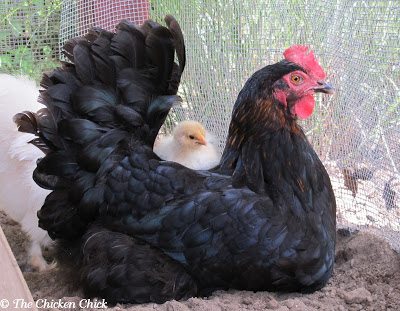
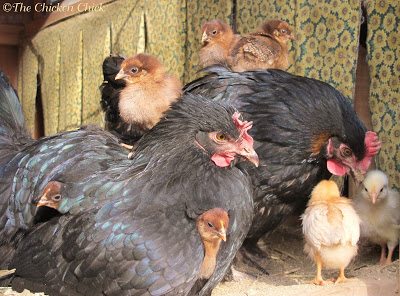
BACK ON TRACK: THE BROODY MOLT
While the chicks are growing, a broody hen will piece of work to rebuild her pre-broody body. She needs to replenish her fat and calcium stores and volition likely shed quite a lot of feathers. This plumage loss that I call a "broody molt" is the result of malnutrition during the setting period and the render to a normal nutrition afterwards. The college poly peptide content in starter feed volition help her to regenerate feathers, which is a protein-intensive process.
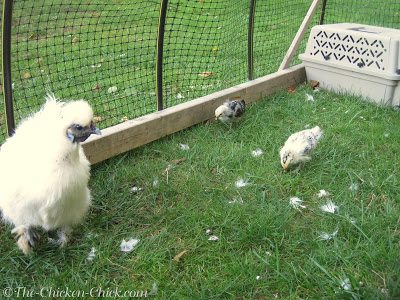
This was my beginning experience with a broody molt. I was pretty sure Freida was going into the pillow-making business organization until I realized the cause of the feather loss was the drastic shift in diet mail service-hatch.
A broody hen will generally begin to distance herself from her breed approximately 5 or six weeks after hatching. She can begin egg-laying any time thereafter.
RANDOM RELEVANT INFO
While some hens volition brood several times per twelvemonth if permitted, serial-heart-searching should be discouraged due to the physical cost information technology takes on a hen. It is possible for a pullet to go broody before she always lays her first egg.
To the extent possible, go out broodies alone. I never knows when she will quit the gig mid-stream when interrupted.
NESTING BOX HERBS
While I am a proponent of herbs to spruce up the coop and nest boxes, I do non recommend putting fresh herbs inside a broody's nest. The warmth and humidity generated past a broody tin can cause the herbs to decay and go moldy, setting up an environment ripe for bacterial growth and embryo death. Stick with stale herbs, if whatever.
Yous May Besides Like
Source: https://the-chicken-chick.com/caring-for-broody-hens-facilitating-egg/
0 Response to "Baby Chicken Pictures Gray Chicken Hatching Out Eggs"
Post a Comment